
- Teacher: Bilal Ahmad Abbasi
- Teacher: Bilal Ahmad Abbasi
- Teacher: Saad
- Teacher: Saad
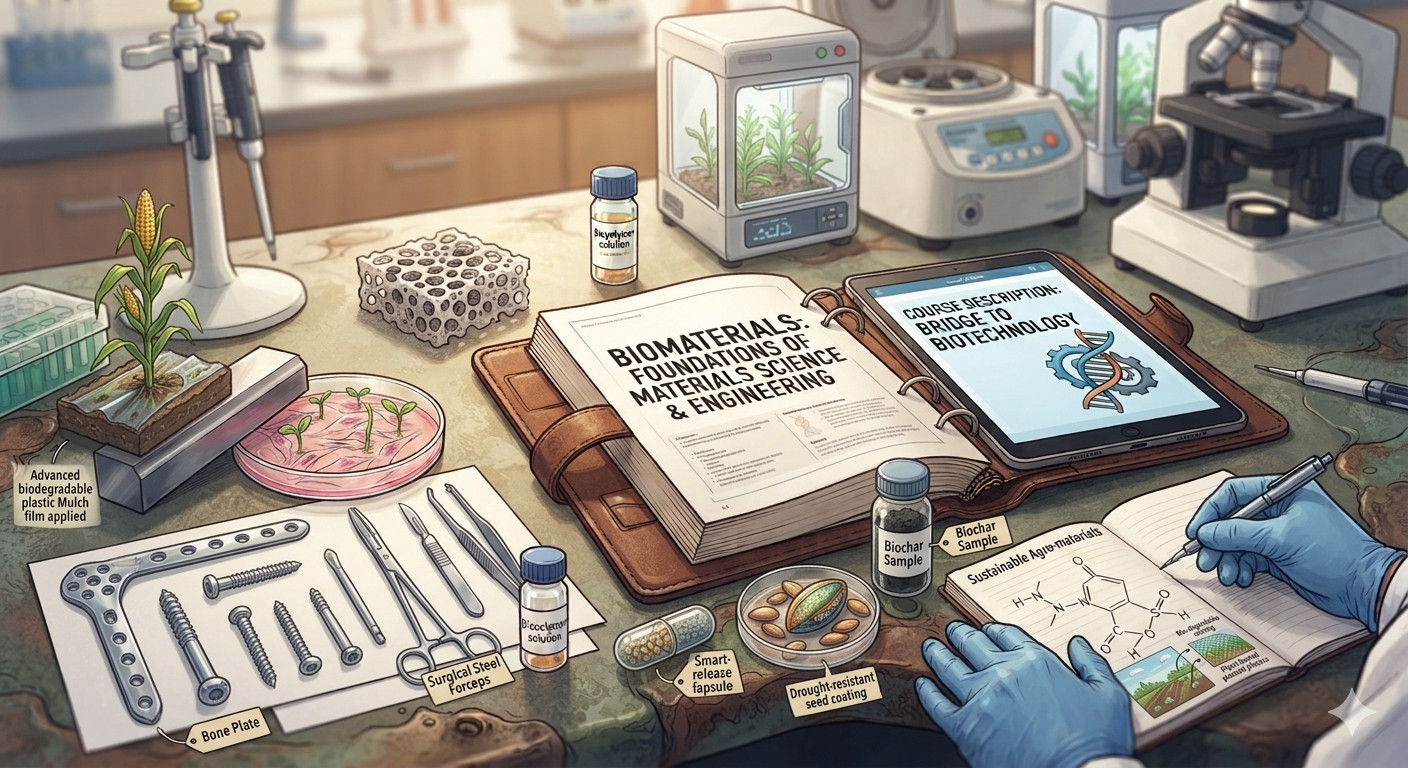
- Teacher: Muhammad
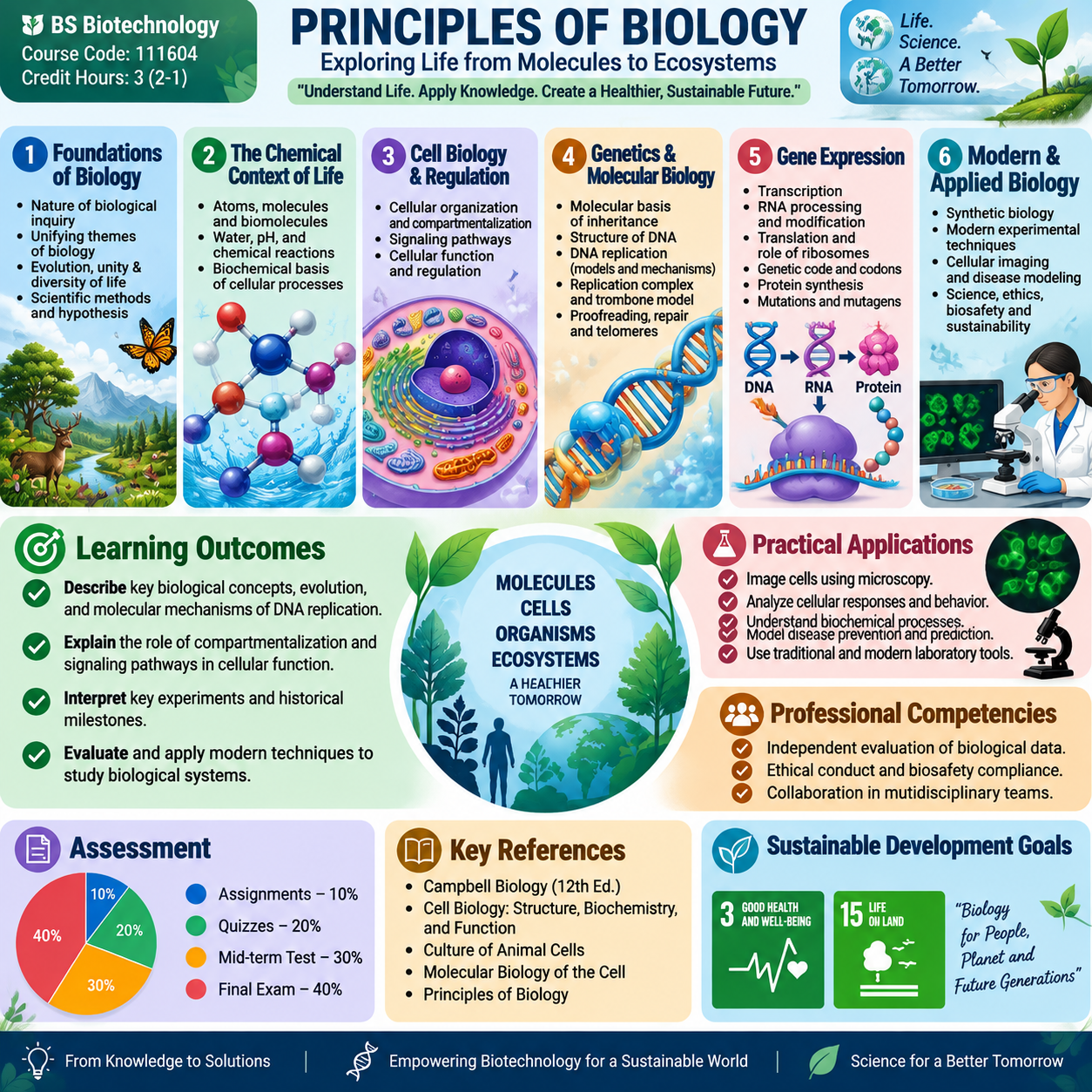
The course “Principles of Biology” provides a comprehensive foundation in modern biological sciences, introducing students to the fundamental concepts that explain the organization, diversity, and functioning of life. The course begins with the foundations of biological inquiry, scientific approaches, and the unifying principles of biology, including evolution, unity, and diversity of living organisms. It develops an understanding of the chemical basis of life, cellular organization, and the biochemical processes that regulate biological systems.
The course emphasizes the molecular basis of inheritance, covering the structure and organization of DNA, historical models of DNA discovery, mechanisms of DNA replication, replication complexes, the trombone model, proofreading, DNA repair mechanisms, and replication of chromosome ends. Students explore the flow of genetic information through transcription, RNA processing, translation, genetic codes, codons, and protein synthesis, along with the role of ribosomes, mutations, and mutagens in biological systems.
Special attention is given to synthetic biology, cellular regulation, compartmentalization, and signal transduction, enabling students to understand how modern biological techniques are applied in biotechnology, healthcare, and research. Through practical components, students gain experience in microscopy, cellular analysis, and interpretation of experimental data related to cellular functions and disease modeling. By integrating classical biological principles with contemporary molecular and experimental approaches, this course develops students’ ability to analyze biological phenomena, evaluate scientific literature, apply laboratory techniques, and understand the role of biology in addressing challenges related to health, environment, and sustainable development. The course also promotes scientific ethics, biosafety awareness, teamwork, and responsible application of biotechnology for societal advancement.
- Teacher: Muhammad Haseeb Nawaz